Wednesday, January 15, 2025

Ride the Wild: The Beauty of Backcountry Bicycling

“Do not follow where the path may lead. Go instead where there is no path and leave a trail.” Ralph Waldo Emerson’s famous quote speaks about doing something that you’ve never done before, going beyond the known and exploring the unexplored. That’s a large part of why I first took up mountain biking in 1993, and even more so riding a “fat-bike” in 2012. The volunteer group I lead had been given two Surly Pugsleys, one of the original production fat-bikes, primarily for the winter events that we help with here in Minnesota. After I posted on Facebook about riding my mountain bike into an interior historic landmark on the Chippewa National Forest in north-central Minnesota, a friend encouraged me to try the fat-bike. I did, and it changed everything.


I ride a Cogburn; a Cogburn Outdoors CB4, pedal-powered bicycle with four-inch-wide tires and 20 gears. The Cogburn was the brainchild of Quality Bicycle Products (QBP), the Minnesota-based company that also brought the world the Pugsley, and its sister, the Salsa Mukluk. Originally marketed to those who wanted to ride their mountain bikes on snow in the winter, fat-bikes quickly gained popularity as an all-season, all-terrain, all-weather, human-powered ATV. Dozens of companies got in on the ride, some including the fatties in their existing lineup, and some building and marketing exclusively fat-bikes. At the peak of this, QBP introduced the Cogburn, a fat bike specifically targeted for outdoor persons. Advertisements for the new cycle encouraged riders to pedal their Real Tree® camo-painted vehicles, “to go deeper, faster, farther, and leave no trace,” in the pursuit of fish and game. Articles appeared in hunting, off-road, and even bicycling magazines, touting the Cogburn for hunting deer, grouse, elk, and backcountry angling, and even using it as a survivalist “bug-out” vehicle. Unfortunately, the Cogburn came out at a time when e-bikes were also starting to gain popularity, and new companies like Bakcou, (then called Backcountry Bikes) QuietKat, and Rambo were marketing their camo-coated products to the exact same audience. Introduced in early 2014, by 2018 the Cogburn was no more. But… I got one!

As I said, I have been mountain biking since 1993, including over two decades as a bike patrol park ranger, and as an EMS and trails volunteer. I have a custom-built 29-inch MTB that I might have never ordered if the Cogburn had been available a year or two earlier. It is the primary bicycle that I ride these days, and while at 70-years of age, I’m certainly considering an e-bike for my next ride, I’m in no hurry, and I certainly will never stop riding the Cogburn as long as I am physically able. Let me explain why: The first part is that, as a retired Ranger, I have a heightened respect for the rules, and the “Authority of the Resource” that created them. At the end of March 2022, the United States Forest Service issued guidelines on the use of e-bikes and e-Mountain Bikes on our National Forests and Grasslands, essentially categorizing electric-powered, or electric-pedal assisted bicycles as motorized vehicles, thereby restricting them to trails that are open to motor vehicles. Although I may not personally agree with these guidelines, they are the rules, and they are subject to change, but until they do I will obey them.


The second, and more personal reason is that most of my off-road cycling, be it for fishing or as a volunteer, takes place on national, state, and county forest lands. I love riding through the tall pines of northwestern Wisconsin and northern Minnesota to access some backcountry stream in pursuit of trout, or pedaling down an old logging road to find a trail that will take me, deeper and farther into the forest, to a creek with deep, dark holes that may or may not hold native browns. I travel at five or six miles per hour, slower going up hills, and faster going down. If I fall, and I do, (My Police Cycling Instructor always said that if you’re not falling, you’re not learning. I’ve learned a lot in 30 years.) the forest floor cushions my landing.

You see things from the seat of a bicycle that escape the eyes and the attention of the motorized visitor. Bear, deer, pheasant, grouse, raccoons, turkeys, majestic bald eagles, squirrels, and even a long-tailed weasel have crossed my path while riding. Once I rode into an abandoned sandpit on the Chippewa National Forest to the amazing sight of over twenty bald eagles feeding. Another time, I watched two adult eagles in pursuit of a red-tailed hawk that had gotten too close to their nest, like two F-15s chasing a P-51. Or I might have missed that 12-inch brown trout leaping into the air in pursuit of a mayfly if I were riding in a UTV. Although I’ve never seen one, one trail that I ride frequently has an authentic “moose crossing” sign tacked to a tree. I’ve seen their tracks but never had to face one of the wily ungulates in person. Another time, while pre-riding the course for a mountain bike race we would be helping at, I came across a good-sized black bear methodically tearing down the flagging the race director had put up only hours before. However, what was probably my most memorable wildlife encounter came one summer afternoon as I was pushing my mountain bike up a steep hill on a backroad in Minnesota’s Superior National Forest. I frequently ride solo, as I was that day, when I got the feeling that I was being watched. I looked up from the roadway to the top of the hill and saw an adult Timberwolf standing there, watching me. I reached for my camera (this was before cell phones) and when I looked back, the wolf was gone. But, when I reached the top of the hill I found his tracks; pawprints the size of saucers. Interestingly, it was on that same ride that I encountered a pair of ATV riders, which were totally legal in that area, and they shared a can of soda with me as I told them the tale about the wolf. As residents of the area, they were more impressed with the fact that I was riding that trail on a bicycle than the fact that I saw wolf.


And it’s not just the wildlife. Chicken-of-the-woods fungus on trees, Jack-in-the-pulpit, lady slippers, Columbine, little white flowers that I don’t know or maybe don’t remember their name. There’s a lot of beauty on the forest floor, and you are likely to miss it, roaring by at 20, or 40, or 55 miles an hour. Fall colors rides are one of my annual must-dos. The yellows, reds, oranges, and browns are magical when viewed from the seat of what I have named, “the Official Fat-Bike of Fall,” the Cogburn. And winter? Winter is the season fat-bikes were invented (in Alaska) for. The very first time I rode a Pugsley back in 2005 was in late winter with fat-bike pioneer (and Pugsley designer) Jon Evingson. As I rode down a local snowmobile trail and out onto Linwood Lake, I remember thinking, “I’ve found my snowmobile.” I garnered strange looks from the ice fishermen going by in their pickup trucks, with their drivers’ doors open, but I gave them strange looks right back. One of the early Cogburn advertisements showed the bike being used for ice fishing access. I’m not an ice fisherman, but I get it. It’s far safer to ride a 35 pound bicycle out on lake ice than a 3000 pound pickup truck. Side note: one time while riding across a frozen Chequamegon Bay on my fat-bike, I looked down to see a fish frozen in the ice. That wouldn’t have happened in a truck or UTV.

How will my eventual changeover to an e-bike, something that is drawing ever closer now that I’m in my 70s, change all of this? Right now, that’s hard to say. I believe a lot of it depends on factors like what specific e- bike I buy, what rule changes take place on their use on state and county public lands, and how my health fares in the months and years to come. I do know that I won’t give up the Cogburn. We’ve had too many adventures together, and it’s restored the fun to mountain biking that I thought I had left behind.



Sunday, October 20, 2024

Conserving the "Blue Lines" We Love


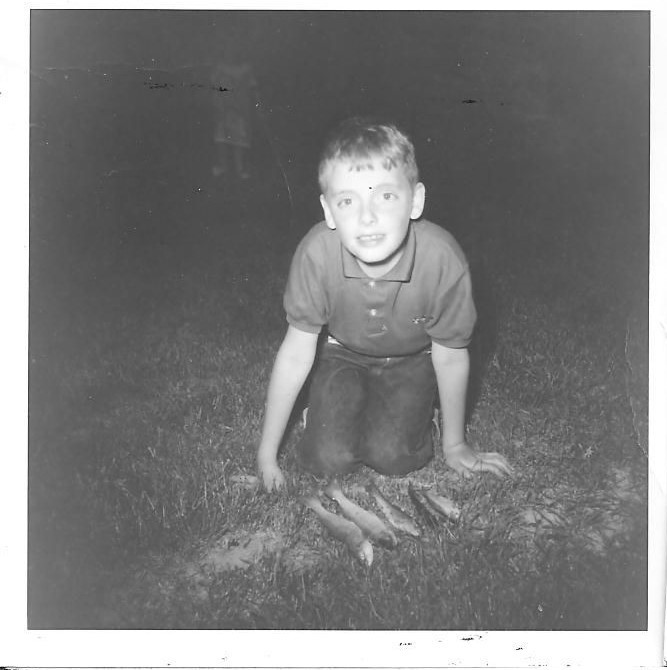
As many, if not most of you have no doubt seen, the theme of the September, ‘24 issue of “Trout” magazine, the official publication of Trout Unlimited, is entitled, “Blue Lines.” On a couple of different forums, including Facebook and the TU Community Forum, I have commented, “Welcome to the Backcountry, TU. What took you so long?” For me, trout fishing has always been about those “blue lines” that illustrate the small rivers, brooks, creeks, and streams on topographic maps that I have fished since I was ten years old. I’m not a curmudgeon, (Well, maybe I am now that I’m in my 70s, but that’s a different topic.) it’s just how I have always considered fishing. For the purposes of the magazine, and the commentary, we’re talking about waterways that are, shall we say, less than navigable. Often times they’re named after their predominant feature, such as Fall Creek, or Big Brook, or their source, like Porcupine Creek, Big Diamond Creek, or Johnson Springcreek. Some have numbers, which can indicate either the order in which the mapmaker placed them after running out of other names, or more often, the length of that particular blue line, like 9 Mile, 18 Mile, or 20 Mile. I got my first trout on a blue line called “6-Mile Creek” outside of Brooktondale, New York. Without giving it much thought, it has always been the type of stream I fish.

I have to admit to a certain amount of trepidation about TU (or any other organization) publicizing these so-called ‘blue lines.’ Just yesterday I was listening to an audiobook by the late John Gierach commenting on the influx of new anglers brought about by the COVID pandemic and how it might affect some of his favorite Colorado fishing streams in his book, “All The Time in The World.” This is something which I have witnessed myself, however, I am at least somewhat consoled by the report from the Minnesota DNR that fishing license sales have returned to their pre-pandemic levels, and I am no longer having to pick up litter and other debris at every place I go to cast a line. Like Gierach, I enjoy the solitude of fishing solo, or with my wife or granddaughter. During and for a time after the pandemic, you couldn’t go much of anywhere without having to elbow your way in to the water.

I am a Trout Unlimited member because, despite the organization’s “wokeness,” its various tentacles are doing good things not just in my home waters of the Chequamegon-Nicolet National Forest, but nationwide as well. It is their primary emphasis, and as long as it is so, I will continue to support them. But my strongest allegiance is to Backcountry Hunters and Anglers, (BHA) the Missoula based nonprofit that advocates for and fights to protect our public lands and waters. BHA sells a bumper sticker that proudly states, “Use the quads God gave you!” Sometimes I use my bike, sometimes I hike, and many times a combination of both. There are two particular streams, that I consider to be “home waters.” (One of them is one of the places where Trout Unlimited has been doing good work as mentioned above.) From the first time I journeyed into Chequamegon Country, I have had an affinity for the Marengo River. I’m not going to give you the name of the other stream, but slowly, as time, weather, and my physical condition permit, I am using those quads to fish as much of it as possible, from its headwaters to where it empties into a larger stream flowing into Lake Superior.


These “blue lines” may not experience the fishing pressure that their larger counterparts do, but there are other threats. Several years ago, our own Department of Natural Resources had an internal conflict between Forestry and Fisheries over the trees along a highly rated stream that flows into Lake Superior, to the point where the US Fish and Wildlife Service withheld funds that account for a significant portion of the agency’s budget. Externally, there is the never-ending battle between development, whether it be for mining, drilling, or recreation, and their effects on our public lands and waters. “Common logic” is that Democrats are better for the environment and that Republicans are better for business, but in many cases those distinctions are no longer accurate. Politicians and bureaucrats of both parties are beholding to special interest groups, to the detriment of the lands and waters that are our unique American heritage. I find it ironic and disappointing that the voices on the right that are so keen on selling off our public lands are members of the same political party as the president who established them in the first place just over a hundred years ago, Theodore Roosevelt. As Roosevelt, and his first Chief of the US Forest Service, Gifford Pinchot, were keenly aware, our seemingly boundless natural resources are not as boundless as they seem.

In this election year, I would encourage voters to look beyond the “R” and “D” in front of the candidate’s name and take a look at the things that are truly important. Too many voters today focus on a single issue, conservative or liberal, whatever it may be. Their focus needs to be wider. A recent survey indicated that as many as ten million hunters and gunowners don’t vote in federal elections, and that number is likely low if you were to add in anglers. Yet, I have no doubt that these would be the people who would scream the loudest when they can no longer access their favorite hunting or fishing spot due to bureaucratic actions directed by whichever party is in charge.

One of my favorite sayings is, “In order to participate, you first have to show up.” If we are going to manage and protect our favorite “blue lines,” we need to show up. We need to show up in the field. We need to show up at hearings. We need to show up in the voting booth. We need to be informed, and we need to participate, not just with hook and line, but at every level. Make it happen, not just for ourselves but for the generations of anglers, hunters, and sportspeople yet to come.


Thursday, September 26, 2024

Trailblazer: The Ultimate Bikefishing Fly Rod


Essentially, I consider the summer of 2024 to have been lost. Having been at my current job for over five years, I was looking forward to the extra week of vacation that longevity provides, as well as no surgeries or recoveries to deal with. However, due to big changes in our department, I was only able to get out camping one night during the entire summer. (Normally, we go up to Beaver Lake almost every other weekend.) So, when my birthday rolled around on the last day of summer in September, we rented a cabin in the Chippewas National Forest just north of one of my favorite backcountry bikefishing locations, Suomi Hills Semi-primitive Non-motorized Area. It would be my first chance to really test my newest flyfishing rod, the Trailblazer from Redington Gear. I had tried it out once or twice, but this would be the first opportunity to use it as it was meant to be used.

Probably my only complaint, and it’s a minor one considering how well the Trailblazer performs, is the garish red color of both the case and the rod itself. Other than that, I can find truly little to gripe about. As I’ve written here previously, most of my bikefishing adventures are done with Tenkara setups. I’ve tried my two 7’6” rods and reels (one of which is also a Redington) but wasn’t pleased with the results. The tube for the Trailblazer is only an inch and a half longer than my Badger Tenkara/TAO U. N. C. Rod, so it fits very nicely on the side of my fishing pack, or alternately, on the Blackburn Outpost cage on my bike’s front fork.

The day we went into Suomi Hills, my birthday, was extremely windy even in the interior. I could barely get the dry fly on my Tenkara onto the water because of the wind, so my expectations for the Trailblazer were fairly low. I was fairly surprised. Using a five weight SA line with a 10-foot 3X leader, taking the wind into account I was able to drop a #16 Copper John pretty much wherever I wanted it. Unfortunately, the fish weren’t cooperating. I had one light strike but didn’t bring anything home. Usually, we pull at least a couple of smallies, perch, or bluegills out of that lake. I was fishing from a USFS dispersed campsite, and we’re already making plans to return for a couple of nights next summer. There is a ridge between the lake and Edge of the Wilderness Scenic Byway, so the site is serenely quiet except for the wind in the pines and the loons on the lake. The Trailblazer will be my rod of choice when we do.

So, even though I didn’t catch any fish with it, I am extremely pleased with my Redington Trailblazer 590-6 fly rod, particularly in my application which is primarily bikefishing. It handles very well, casts like a dream, putting the fly where I wanted even in 15 mph winds. If you access the backcountry on a mountain bike, like I do, or backpacking, the Trailblazer is perfect. It comes in two lengths, 9 feet like mine, or 7 feet, 6 inches, and both lengths break down into six pieces which fit nicely in their own bright red and yellow padded carrying tube. The tube lashes to the side of a pack, the top tube or downtube of a mountain bike, or the cargo rack on any bicycle. Add a reel (I use a Redington I. D.) and a selection of flies, and you’re good to go. You can find more information at: 

TRAILBLAZER Fly Fishing Rod 5 Weight, 9ft 6in | Redington (farbank.com)

together with a really cool video that ties Albert Einstein into flyfishing: 

https://youtu.be/COlnyamFIkw?si=VMT0-bI8cxd5juFe

I only have one other minor issue with Redington. I wish they would bring back the “good” decals for the I. D. Reel.

Until next time, tight lines!

UPDATE: I retired from my job on Nov. 15. Haven't decided what's next, other than definitely more fishing!


Sunday, July 14, 2024

The Cogburn: Fat-bikes, E-bikes, and Fair Chase Part 2


I am going to start this blog entry with the request; If you know of an actual case where an e-bike operator has been charged with a fish and game violation or hunting/fishing related trespass violation, please contact me via the “Comments” section below. After researching for several weeks, I have only been able to locate only one case where an e-bike users were charged with using their electric-assist bicycles to pursue and take wildlife, and that was on the Backcountry Hunters and Anglers website several years ago. I’ve found a few cases where e-bikes were used to access closed areas, and one case in California where poachers used e- bikes to transport their illegally taken game. However, it appears from my research that the often-stated belief that e- bikes would be used to run down wildlife, often couched with words like “could,” “might be,” “possibly,” and “potentially,” are based on supposition and misunderstanding. To be clear, I firmly believe that anyone who uses any “motorized” vehicle, whether it’s an ATV/UTV, pickup truck, SUV, or an e-bike to violate Fair Chase laws and ethics should be prosecuted for that violation. I just cannot find any records of it happening with e-bikes despite numerous Google and Yahoo searches.

QBP Photo
The introduction of the Cogburn in 2013 produced a number of articles in publications as diverse as “Petersons Wheels Afield,” “Off Grid,” “Outside,” and even “Bicycling,” that spoke glowingly about how hunting, and by default, fishing, in the backcountry could be enhanced by accessing the area on silent, low impact, fat-tired mountain bikes. They were even touted as being the perfect “bug-out” vehicle capable of carrying a weapon, such as a compound bow or rifle on their specially designed scabbard rack. None of the articles, and I still have a file with most, if not all of them, mention chasing down wildlife with the bicycle. Granted, a pedal powered bicycle is not going to keep up with a fleeing deer, elk, or antelope, but using pedal power, the hunter or angler was (and is) able to go farther, faster, deeper and do it quieter and with less impact. Fat-bikes are even capable of riding over snow and sand when their tire pressure is dropped to 5 to 8 psi. Truly, they are a human powered All-Terrain-Vehicle.

The demise of the Cogburn model marked the end of a human powered bicycle designed specifically
for sportspeople. Of course, you can use pretty much any bike for whatever purpose you want. My very first experience at bikefishing was on my Bianchi Volpe touring bike, accessing various stocked trout lakes in the Cuyuna Country State Recreation Area in central Minnesota. The next time, on the Chippewas National Forest, I used my patrol mountain bike. Since 2014, my ride has been the Cogburn. It’s fun, it gets me to where I’m going faster, and carries a lot of stuff. As I’ve said previously, my next bicycle purchase will probably be an e-bike, but in the immortal words of Aragorn in the “Lord of the Rings,” “it is not this day.”

I have posted the question with which I started this blog post on several different bikefishing and hunting Facebook groups. It will be interesting to see what kind of response, if any, I get back in return. If it happens, you’ll read about it here.

Keep the rubber side down!

Friday, June 28, 2024

The Cogburn: Fat-bikes, E-bikes, and Fair Chase Part 1

QBP Photo
Way back in 2013, before Rambo came out of the Backcountry like a Quiet Cat, somebody at Quality Bicycle Products (QBP), the Minnesota-based 600-pound gorilla of the bicycling industry came up with an idea. Essentially, it was, “let’s design and market a fat-bike for sportsmen.” QBP was the parent company of both Surly, creator of the Pugsley, and Salsa, with it’s fat-bike entry, the Mukluk, both of which were regarded as bicycles with their 4-inch-wide tires primarily to be ridden on snow or sand. They had been around for a few years at this point and were starting to gain acceptance for other types of riding such as commuting and long-range bicycle travel. What the folks at Q envisioned was a wide-tired mountain bike with a sturdy frame, solid rims (wheels) where the Pugsley and Mukluk boasted weight saving rims with holes between the spokes, a robust, reliable drivetrain, and a RealTree ® camouflage paint job. They called it the Cogburn.

The Cogburn drew its name from the tough, fearless one-eyed US Marshal Ruben J. “Rooster” Cogburn played by John Wayne, Jeff Bridges, and Warren Oates in the three variations of Charles Portis’ Western novel, “True Grit.” Cogburn brand manager Bobby Dahlberg said that the name was meant to evoke the spirit of Rooster Cogburn, “a rough-and-tumble guy who gets it done.” Quality’s own advertising for the brand called the bike, “a human powered all-terrain vehicle (ATV) built to take hunters, anglers and foragers quickly and quietly further into the backcountry.” They introduced the brand at Minnesota’s Game Fair, promoting its backcountry capability with T-shirts emblazoned with a deer head and gear cog motif, and the insignia of Backcountry Hunters and Anglers (BHA) on the sleeve, the sale of which generated a two-dollar donation to BHA for every shirt sold.

QBP Photo

The volunteer mountain bike patrol that I belonged to (and still do) had been gifted two Surely Pugsleys, so I was familiar with fat-bikes. I had seen the Cogburn at Game Fair, bought one of the T-shirts and camo ball cap with the logo embroidered on it, (I still have both) but it wasn’t until the Winter Camping Symposium the following October that I was actually able to ride one. It was “love at first ride.” With its upright seating position and longer wheelbase, the Cogburn was a joy to ride. I’ve said elsewhere in this blog that two years earlier I had purchased a custom-built mountain bike, and it’s a great bike built for the rigors of bike patrol and emergency medical services. But, if the Cogburn had been introduced two years earlier, I probably never would have bought the patrol bike. I ordered one shortly after arriving home from the symposium, and took delivery at the end of December, just after Christmas.

It’s been said more than once that I put the “angler” into Backcountry Hunters and Anglers, the national public lands and waters advocacy organization that I had been part of for several years before the Cogburn came out. Indeed, initially my bike was used to access backcountry streams and lakes, but it was such a great ride that it quickly became my primary mountain bike. Although I have great fellow feelings for both gun and archery hunting, I am not a hunter. I use the Cogburn to seek trout.

There were some very good magazine articles, videos, and even some syndicated TV programs that featured the Cogburn in its native environment. Publications as diverse as “Petersons Hunting,” “Wheels Afield,” “Bicycling,” and “Outside” featured stories about the Cogburn. The bikes appeared on several different episodes of "My Outdoor TV" streaming service. Word got out, and sports men and women responded positively.

Sadly, the Cogburn’s run lasted only a few years. In October of 2017, just four years after it was introduced, QBP announced on social media that they were shutting down the Cogburn program, thanking those of us who had bought the bikes for our support and wishing us the best. While it was never revealed the exact cause for the shutdown, marketing pressures being what they are, what had been a unique niche had attracted competitors, and many of those utilized pedal-assist electric motors. Where the Cogburn could get you farther, faster, and with minimum impact, E-bikes did the same thing, expended less human energy, and came in a variety of camouflage paint jobs.

I know that it’s been a while since I posted here, weather-wise, it’s been a very strange spring and early summer. The nearly snowless winter we went through was followed by rain of near-biblical proportions. So much so that it’s been difficult to even get out and ride, although I did my annual Lewis and Clark 5K fundraiser on my road bike in May and other short rides. Hopefully, the rest of the summer will see drier conditions, not so much as to bring back the drought that experts had predicted after the lack of snow this winter, but enough to get in rides and fishing between the raindrops. In my next piece, coming soon, I will discuss the issue of “fair chase” and bikes in the backcountry. One of the issues that has risen up with the popularity of e-bikes is the use of them to take wild game. I’m still doing my research on this to determine if the problem is genuine or just overblown, or a bit of both. As an angler, it’s not really an issue for me, but as a cyclist, a conservationist, and a retired park ranger it is. I’ll be looking into it more the next few weeks and I’ll get back to you.

Wishing you dry trails and tight lines.

Tuesday, April 16, 2024

Stream Trout Opener

 Minnesota Stream Trout Opener, (Clover) Hay Creek, St. Croix State Park, Cloverdale (Hinckley), MN. Water level: Moderately high Temperature: 46-48°F (Measured 3x) Air Temperature: 79°F. Wind: S 10-15 MPH, Gusts 25.

1 rise, no strikes, Badger Tenkara UNC w/ hare's ear nymph.

Friday, April 12, 2024

Monday, April 08, 2024

Monday, February 12, 2024

Backcountry Hunters and Anglers Rendezvous Update


IMPORTANT RENDEZVOUS UPDATE:
This year Rendezvous will now take place at the Minneapolis Convention Center in downtown Minneapolis, MN, on April 18-20, marking the first time our annual gathering will be held outside the northern Rockies.⁠

This is a venue change from our initial announcement. President and CEO Patrick Berry shares, "We weren’t comfortable with the somewhat surprising prohibition on safely displayed firearms, knives, and other tools of the trade for hunters and anglers. In keeping with BHA’s steadfast commitment to both the core constituency of the BHA community as well as some our corporate partners, we unapologetically decided to find a new location where we could enjoy Rendezvous in our distinctive way.”⁠

More information to come, but grab your tickets now at https://rendezvous.backcountryhunters.org/ 

Wednesday, December 06, 2023

Casting Forward: Fishing Tales from the Texas Hill Country

 The perfect Christmas gift for the angler on your list, or the vet! (or both!)


I saw reviews of this in "Trout" and "Fly Fisherman" but didn't pay much attention. After all, it was about Texas, and I live in Minnesota. Then, I heard passages from the book read in Mending the Line Movie and I knew I had to read it. I'm glad I did. It's a beautifully written, thoughtful, and absorbing book. I'm not a veteran, but I've been a first responder of one sort or another all of my adult life (51 years now) so I am no stranger to PTSD. I get it. This book is beautiful.

Saturday, September 09, 2023

What's in My Bikefishing Bag?


The bike is a Cogburn CB4 fat-bike. I've covered that in the last week's post and many times before that. What else do I carry on my #bikefishing expeditions? As you can see from the photo above, a lot. So, some explanations:

First, I do not carry all of the above every time I go out. There's no reason I couldn't. The bike and my pack system are certainly capable. But the simple truth is why? You can only fish one rod at a time (for trout, anyway) and two are usually in my pack anyways. (plus, the "Tiny Tenkara" rod lives in my frame pack, even though it's probably the one I use least.) It is just always there if I need it unexpectedly.

Second: I always, ALWAYS, A-L-W-A-Y-S carry the "10 Essentials." They live in the frame pack with the Tiny Ten, or the Jandd Rack Pack on the Blackington Outpost rear rack. Waterproof paper map and analog magnetic compass, Sharp MORA sheath knife, Adventure Medical Kits first aid kit, augmented with several pairs of nitrile gloves, a malleable padded aluminum SAM Splint, and NOLS Wilderness Medicine Field Guide, spare rain jacket, high energy food. (Clif Bars and maple syrup packets), combination headlight/flashlight, Tacoma Mountain Rescue Storm (Survival) Kit with shelter, matches, fire starter, signal mirror, whistle, etc., SPOT-X satellite communications unit, cell phone (which also connects by Bluetooth to the SPOT-X and contains the TroutRoutes app. It's not in the photo because I was using it to take the picture.), helmet (The orange one is old. A new, tan one arrives on Wednesday.), tire pump, spare tire inner tube, bike repair multi-tools (Gerber Cool Tool and Planet Bike hex set), sunblock, bug repellent, polarized eye protection biking gloves, and floppy hat. I also carry a pair of wading slippers if I'm not using waders.

Third: Fishing stuff. Minnesota and Wisconsin fishing license, Redington Trailblazer Rod, reel, and a selection of flies in separate wet and dry fly boxes, Loon fly prep, Tenkara Adventure Outfitters/Badger Tenkara U.N.C. (Un-Named Creek) rod, Reyr Gear Tenkara rod (plus the previously mentioned Tiny Tenkara), Yonah Tenkara belt pack with Kebari and reliable dry flies, and spare level line and furled leaders, forceps, and clipper tool, and a Reyr Gear folding net. (Never have been able to get the thing back in the holster the way it came.)

I specifically sought out the Redington Trailblazer after a bad experience with a Cabela's/Bass Pro pack rod that broke its tip the very second time I cast it. The 9-foot Trailblazer breaks down into six sections and they fit into a two-foot-long rod tube that can either be carried on the side of my backpack or on the Outpost "Anything Cage" on the front fork, and it casts like a dream! I usually keep the Tenkara rods, and the Yonah Pack in the car all through trout season, and into panfish and smallmouth season.

I go back and forth between the Simms Flyweight pack and a Gander Mountain Realtree camo hunting pack. I sort of prefer the Gander pack because of the three zipper pockets accessible from the outside, although Simms pack has higher capacity. Both feature side pockets to carry rod tubes and/or water bottles and a sleeve and port for a hydration bladder and drinking tube. (The Cogburn also has a bottle cage under the downtube, two more available on the frame if the framepack is removed.)

I can also add Jandd Expedition panniers to carry my waders and boots, or a tent, sleeping bag and pad, and camping stuff if I want to go into the backcountry overnight, and am looking at an Old Man Mountain front rack to make that even more possible. Some other things you don't see in the photo; my Eagle Claw telescoping rod with a Daiwa Silvercast reel and Mepps trout spinners for if I want to "catch and eat" instead of  "catch and release," and my larger, wood handle/frame and soft rubber landing net, that I carry between the pack and my back.

So, there you have it; what I use and a bit about why I use it. It's a great combination that works really well for me.


Monday, September 04, 2023

In Search of Home Waters (From the eBike Generation blog)

     I haven't posted much of anything this summer, mostly because I have been working on this article for eBike Generation's blog (For pay!) and it has taken a lot of my free time to prepare. I hope you enjoy it, and if you are in the market for an e-bike for fishing or hunting access, I encourage you to check them out! (Link above, and in the sidebar.) You can expect more posts in the weeks to come.


In Search of Home Waters

By Hans Erdman

The creek was running clear, like flowing glass, as I dropped the Tenkara line with a bead-head nymph into the water. As I lifted the rod and the fly drew closer, I lost sight of it, a few feet beneath the bank I stood on. As I started to raise the rod to cast again, suddenly the line went tight. Fish on! The fish fought the rising, thrashing back and forth. I brought the pole to near vertical, reaching for the line, but the twisting fish swung it out of my reach. I tried again; the rod held back in one hand, while the other reached for the furled line with the fish on it. From my angle, on the top of the bank, at first I thought it might be a sucker or a chub, but as the fish finally came into view, I realized it was a trout, a pretty little Brook Trout that didn’t want to hold still long enough for me to get it off the hook and back in the water. I wet my hands, snapped the picture, released the hook, and let the brookie go back where it came from. I was happy. I’d found my Home Waters.

Two surgeries on my left foot over the course of the past two summers have given me the opportunity to do some reading that I might otherwise not have had the time or the chance to do. Of the many books that I read during my recovery, two of them stuck out in my mind, both of which centered on the topic of “Home Waters.” One of them, “Casting Forward,” by Steve Ramirez, I found out about when I saw the movie, “Mending the Line.” The other, aptly titled, “Home Waters,” by John N. Maclean, tells the tale of his family’s history and love for the river made famous in the short story and movie, “A River Runs Through It,” in which the author’s father, grandfather, and uncle were the principal characters.

Reading those books set me to thinking about just what are my “home waters?” I live in Minnesota, but I spend much of my time and do much of my fishing in northwestern Wisconsin. I’ve grown to love Superior, Chippewa, and particularly the Chequamegon National Forests of Minnesota and Wisconsin, and the abundant opportunities they present for two of my favorite activities, mountain biking and flyfishing. (It was mountain biking that drew me to the Cable area of Wisconsin in the first place.) A few years ago, I bought a bicycle that was specifically designed for combining the two; the Cogburn Outdoors CB4 fat-bike. The Cogburn was one of the first fat-tired mountain bikes marketed specifically for the outdoor sportsmen and women as kind of a “human powered ATV.” Because of its versatility and its amazing ride, it has quickly become my favorite means of backcountry travel. The bike was designed to take the hunter, angler, or forager, farther, faster, in almost any terrain, on 4-inch-wide tires with twenty-two gears to get there. As my foot and ankle got progressively worse over the past few years, the Cogburn (and my other two bicycles) became increasingly important as my way to get back into the post-pandemic woods.

 Riding a bike in the forest, whether it’s on trails, fire lanes, or just forest roads, can be a relaxing, rewarding experience, just as fishing itself can be. The bicyclist can see, hear, and even smell things that escape the attention of a rider on an ATV, side-by-side, or, particularly, an enclosed car or truck. You can smell the sweet scent of the balsam and pines, hear the wind blowing through the trees, and the rushing of the roadside stream over the rocks, pause to watch a turtle or porcupine crossing the road, catch a glimpse of a doe and her fawn at the edge of the trees, or a racoon watching you from high up in a maple as you quietly pedal by. With the help of a phone app like TroutRoutes®, you can pick your water, navigate to the closest bridge, and hike or even ride a passible creekside trail to find places and pools that could hold that elusive twenty-inch Brook Trout or Rainbow you’ve maybe heard rumors about. Or sometimes you can find more. Sometimes, you can find home.

Finding home waters is a process of searching for something that “feels right.” Riding on the Superior and Chequamegon-Nicolet National Forests, public lands from which the water flows into Lake Superior, is different every time I ride there, and sometimes what feels right in June, just doesn’t make the cut in August. But if I venture to the same spot amid the flaming maples of early October, it all snaps into place again. Tenkara is like that as well. The Japanese-born style of reel less fly-fishing is often the perfect fit for the “bikefishing” that is my outdoor passion. I’m not the first person to take up bikefishing, I know, but when I discovered that I could take the Cogburn and a light fishing rod, either an ultralight spin casting rod, a collapsible Tenkara, or most recently a six-piece fly-fishing pack rod, deeper into the backcountry, it opened a path I’d never even thought of before. And, if I load on panniers, my solo tent and sleeping bag, I could easily stay out there for a day or two.

The Cogburn is not an e-bike, which is important because most of my riding takes place on National Forest trails where “motorized” vehicles (including e-bikes) are prohibited. I haven’t made the jump to an e-bike yet. As I approach 70-years old, I’m sure I eventually will, but for now, I am the power that drives the Cogburn. Another decided advantage to this is that a 35-pound fat-bike is a heck of a lot easier to maneuver or carry over and around the occasional downed log or protruding rock on the trail than a 65-pound e-bike. Forest Roads, fire lanes, snowmobile, and ski trails, and many hiking trails are now my paths to adventure, chasing rainbows, and bookies and browns. (And the occasional smallmouth bass.)

The search for Home Waters took me far from my real home, to the two previously mentioned National Forests, Minnesota’s Chippewa National Forest, as well as to the Driftless Region of Southeast Minnesota with my daughter and two granddaughters who are both on their way to college this year. Names like Whiskey Creek, Kremer Lake, Root River, and the famous Whitewater River all rolled beneath my wheels, until I finally found myself back where I started, on the western, Chequamegon side of Chequamegon-Nicolet National Forest. On its eastern side, the Marengo River is home to a Trout Unlimited Great Lakes Project stream rehabilitation project and lies only a few pleasant miles from my favorite off the grid Forest Service campground. It’s a comfortable ride that also crosses more trout water at pretty Whiskey Creek. The North Country National Scenic Trail follows Spring Brook in the other direction from the campground, where I had one of my more memorable disappointments while bikefishing. The first time I explored that trail by bike, I happened upon a nice little pond that was probably part of Spring Brook at one time and where the fish were hitting the surface, slurping up small mayflies. I leaned my bike against a tree, pulled out my Badger Tenkara U.N.C. (Un-Named Creek) rod, and had just tied on the right fly but before I could even cast, a big black Labrador Retriever threw himself into the pond as only an enthusiastic Lab can. His owners were very apologetic but, obviously I wasn’t going to catch any fish in that pond that day.


On the other side of Chequamegon lies the White River, a popular and highly regarded Class One trout stream managed by the Wisconsin DNR. In between are several streams whose names reflect the distance they travel from the Porcupine Lake Wilderness Area, flowing northwards to larger streams that end up in Lake Superior. They are home to Brook, Brown, and Rainbow Trout. These waters can be accessed by foot, and outside of the Wilderness Area, by car or bike. In some places, it is possible to pedal into the creeks on old fire and logging lanes, somewhat overgrown, and unused. It is here that the fat-bike excels. The wide tires negotiate the varied terrain with ease, and the multiple gears make all but the steepest climbs almost easy. The trails and the streams are shaded, the ride, challenging enough to make it worthwhile, but not blowing your lungs out. And there are no crowds. In fact, no one at all. Just me, the creek, and a beautiful Brook Trout. I was back where my search began. I had found my Home Waters.


Wednesday, June 14, 2023

"Mending the Line" Maybe the Next "A River Runs Through It".


My wife Ellen and I went to see "Mending the Line" on Sunday. This may or may not be the next "A River Runs Through It," but it is definitely a movie to see, especially if you're a vet, work with veterans, or volunteer with groups like Warriors and Quiet Waters, Project Healing Waters, Reels to Recovery, or any other organization that uses fishing to help veterans. We were more than slightly disappointed that we were the only two people in the theater.

I am not a veteran. My experiences with Post Traumatic Stress come from an adult lifetime in emergency medical services, search and rescue, and as a park ranger, particularly as a SAR dog handler in a couple of disaster situations back in the 1980s. But I have had friends, close friends, who were or are veterans of Viet Nam, Iraq, and Afghanistan. It may not be the same, but I believe it gives me some measure of understanding. I've had the nightmares. More importantly, I have a wife who took up fly fishing (with me) after completing chemotherapy for Lymphoma. I have seen first-hand the healing it has given her. It works.

Bryan Cox, Sinqua Walls, Perry Mattsfield and Wes Studi (who served in Viet Nam) are all exceptional. I've been a fan of Studi since "Last of the Mohicans" and as Lt. Joe Leaphorn on PBS's "Mystery." In Josh Caldwell's interview with Tom Rosenbauer on the Orvis Fly Fishing Podcast, Caldwell stated that Mattsfield was the only cast member who had fly fished before the movie was made. However, in an interview after it was released, Wes Studi commented he was going to continue fly fishing, and he intended to go back and actually catch a fish, and "maybe eat it."

The fishing scenes are beautifully filmed, and Livingston, Montana, shines as the place where the film was shot and takes place. My wife and I go on a fly fishing trip every Father's Day weekend, (We're heading to the Minnesota Arrowhead this year.) but after the movie she said next year we're going to Montana. No argument here!

The movie is rated "R" for rough language and combat violence, but it is excellent, beautiful and very moving. I would encourage all anglers to get out and see it.

There is another "Mending the Line" movie out there, also about a veteran. It is a documentary and can be found exclusively on Fishing TV Channel. It's the story of Frank Moore, a D-Day vet and Fly-Fishing Hall-of-Famer who goes back to France at age 90 to fish the streams he crossed as a soldier, finding healing in the process. I haven't watched it yet, but it's on my very short list.


Mending the Line https://www.bluefoxentertainment.com/films/mending-the-line
 

Wednesday, May 03, 2023

TroutRoutes' First Masterclass: E-Scouting with TroutRoutes PRO

 TROUTROUTES 101


TroutRoutes Masterclass

Join us as we host virtual Zoom based webinars with presenters ranging from TroutRoutes team members and ambassadors to trusted partners and industry professionals covering a range of topics with the overarching goal of helping to make you a better angler.
Join our Lead GIS Developer, Jeremy Gilbertson, for the very first TroutRoutes virtual masterclass on Tuesday, May 16th from 7:00-8:00 pm CDT. We will be going over how to make the most of your TroutRoutes PRO membership and how the TroutRoutes app can help make you a more successful angler. (https://troutroutes.com/masterclasss/)

From Hans: I use TroutRoutes on pretty much every stream fishing trip I take. Coupled with the Garmin GPS on my bike, it is an invaluable asset to put me where the fish are likely to be. I am proud to be an ambassador for the app.