Tuesday, June 19, 2018

The Return is Nigh!

It's been a while. I've been sidelined by two broken legs (one on each side) and abdominal surgery ever since the season opened, and we got 19 inches of snow on opening day. Now that I am out of the leg splints. my orthopedist has prescribed going fishing as excellent therapy...and then the past two days we have had 8-14 inches of rain overall my favorite fishing spots. Can you say, "wash-out?" This won't be my most stellar year, but as soon as the monsoon subsides, I will be hitting the streams in NW WI and NE MN.

I have several rods; a Badger Tenkara UNC pack rod for bike-fishing and a Cabela's RLX 5 wt. are my two primaries. An old Eagle Claw, my first fly rod, from back in the late '70s when EC was still a top quality brand not an Amazon discount item. I also use Daiwa Silvercast ultra-light spinning rod, and a telescoping Shakespeare with a small Daiwa reel on it for packing into the interior. My favorite flies are olive caddis flies, black fly flies, hoppers and red worm flies. Lighter colored streamers seem to work best on the Tenkara in the winter, but I have a box that is specifically flies for the UNC, and I hope to try more of them out when my recovery is over. (One more week!)

My go-to vehicle for the frontcountry is still my '05 Dodge Dakota, which has been giving me fits, but it runs. I access the backcountry on my Cogburn CB4 fat-bike. Can't wait to get back on it.

How many of you saw the article in "Fly Fishing Magazine" about the Driftless Area Flyathon? How do you think something like that would go over for Bikefishing? Just wondering.

Stay safe!
Hans

Thursday, January 26, 2017

Backcountry: For The Forest


I’ve become very wary of posting my opinions, particularly those relating to politics, and the environment, on THE social media outlet (you know the one I mean), not because I can’t deal with constructive criticism, but because for some of my supposed friends, particularly long-time friends who have known my political views since we were in high school, have spewed some pretty virulent attacks on me in recent days, and upped their game to “destructive criticism”.

The new president of this country is going to change things up quite a bit. Nobody is denying that on either side of the fence. While I am a social and fiscal conservative, when it comes to the backcountry, I am probably best described by the line from the song “Smokey the Bear”; “But don’t you harm the trees, for he’s a Ranger in his heart.” I have also heard it said, “You can take the Ranger out of the forest, but you can’t take the forest out of the Ranger.” It was for this reason that I continue to staunchly oppose the Minnesota DNR’s Division of Ecological Services plans to turn Sand Dunes State Forest, where I used to work, into an Oak Savanna Prairie by removing thousands of red and white pine trees.

As I have written here, and other places, one of my conservation heroes is the first Chief of the US Forest Service, Gifford Pinchot. In addition to being the first Chief of the Forest Service, Pinchot also served as two-term governor of the Commonwealth of Pennsylvania and president of Penn State University, where my father went to college. He was, along with Carl Schenk, the first to bring the science of forestry to the United States in the late 1800s, and his oft-quoted philosophy of “The Greatest Good” (“Where conflicting interests must be reconciled, the question shall always be answered from the standpoint of the greatest good for the greatest number, in the long run.”) has guided me not just in my conservation efforts, but in many of the other things I do as well.

Forestry is a very adaptive process. No one procedure, technique, or application is going to work for every piece of forest land. This applies, among other things, to the differentiation between, “wilderness” and “backcountry”. Last year in this space, I wrote a piece on how I believe that mountain bikes could or should be allowed in certain wilderness areas, with certain reservations. It was the single most read post I have published in the 11 years that I have been doing this blog, with over 1000 hits. What I said in that post reflects my “greatest good” philosophy. It doesn’t fit in every place, or apply to every wilderness area.

I came to a couple of realizations last week while visiting the Chequamegon National Forest in Northwest Wisconsin. I braved some very icy road conditions off of the major highways, to try my hand at a little stream fishing just north of the Porcupine Lake Wilderness Area, northeast of Cable. In fact, I parked in the parking area for people visiting the Wilderness, crossed the road and fished and took pictures of 18 Mile Creek in what, back in New York, we would have simply called “Wild Forest”. The US Forest Service, like most government agencies, loves to put big titles on things, so the area is known as the “18 Mile Creek Semi- Primitive, Non-Motorized Management Area”, which is a step down from true wilderness. The biggest difference between a “semi-primitive, non-motorized, management area” and a “wilderness” area is that you can use mechanize transport, i.e. mountain bikes in the semi-primitive area. I mean it is just on the other side of the road from the wilderness, the terrain is the same, the forest is the same, and the river runs through it.
 
The realizations I came to are these; First of all, I am totally sick of all the politics and the mean-spirited, no, scratch that, downright nasty things that people are saying to each other in the aftermath of the presidential election. The other thing that I realize is that at my age, other than casting my vote and on occasion writing my representatives in Congress, who probably won’t listen to me anyhow, because I don’t have the dollars to back me up, there’s not a lot that I can really do. What I can do is continue to be a good steward of, and advocate for the Backcountry.

Whether you call it backcountry, wild forest, semi-primitive non-motorized management area, or wilderness, America as a nation is blessed with an abundance of wild places, and there are those, unfortunately primarily on the Republican side of the aisle, who would sell those off to the highest bidder. I am a member, in fact a Minnesota board member and Habitat Watch Volunteer with an organization called Backcountry Hunters and Anglers, and we’re the ones along with the Theodore Roosevelt Conservation Partnership, Trout Unlimited (of which I’m also a member), and a new organization made up of many of the major manufacturers and distributors of outdoor recreational equipment called the Outdoor Industry Association are pressing back. The threats to our public lands are very real, and those in Congress who are inclined to believe that the new administration will back them up when they tried to sell our public lands may be surprised when they realize that President Trump has pledged publicly, to “Uphold the legacy of Theodore Roosevelt.” That legacy is our public lands.

Public lands are our American heritage. The only thing that politicians recognize more than $$ is the power of the ballot. Not only do we need to vote, but we need to let our representatives at both the state and federal level, know that we vote, and how we vote. That we vote in support of keeping public lands in public hands.

The other thing that came to me while standing along that creekside in northern Wisconsin was this; I am going to learn that creek, and 20 Mile Creek which is adjacent to it, and I am going to learn them so well that by the end of the season I will be able to serve as a backcountry guide again.

And we’ll do it on fat bikes!

Proceeding on…
2WX

Friday, December 09, 2016

BHA Habitat Watch Report-2016: Year of the Storms

If you are going to go anywhere, on foot, on mountain bike, or canoe, expect to do a lot of bushwhacking. Regardless of which side of Lake Superior you are on, this was the year the winds took down the trees.

I am the Backcountry Hunters and Anglers Habitat Watch volunteer for the Superior National Forest and the Lake Superior watershed. Since the Lake Superior watershed also includes parts of Wisconsin, Michigan and the province of Ontario, and since I spend a fairly substantial amount of time on the Chequamegon National Forest in Wisconsin every year, realistically I consider myself the Habitat Watch person for the entire western end of the lake. Unfortunately, this year it doesn’t matter. The Kokapelli winds wreaked havoc with the entire region at one point or another, this past spring and summer.

As I explained to the MN- BHA board when I accepted this assignment, I am more of an angler than I am a hunter. (Although it could be argued that I am not much of an angler either.) Be that as it may, access affects all of us who use the backcountry, whether it’s for hunting, fishing, hiking, canoeing, mountain biking, any activity.

Although an earlier storm caused significant damage in the Isabella area of Superior National Forest, it paled in comparison to the devastation left in the wake of the storms of July 11th and 21st. From the eastern and of the Chippewa National Forest through Duluth and Minnesota’s Arrowhead region, and on the south shore, battering the Chequamegon-Nicolet National Forest’s western reaches so badly that the forest shutdown most of its northern areas. The damage on the Minnesota side resulted in numerous roads and trails being blocked by blowdown, as well as raised water levels in lakes, streams, rivers and even bogs.

I’m going to concentrate more on the damage done on the Chequamegon side, because it had a tremendous impact not only on the habitat, but also on the people of Douglas, Bayfield and Ashland Counties. Although a dozen or so campers were evacuated from the Boundary Waters Canoe Area following the July 21st storm, in Bayfield County three people died and 11 or injured during the passage of the two storms. It is estimated that 12 to 15 inches of rain fell on July 11th in about four hours time. This created tremendous pressure on the rivers and streams of the region, producing considerable erosion and in some cases re-creation of existing waterways. One trout fishing guide whom I am friends with, said that the Marengo River in Bayfield County, WI, (one of my most favorite trout streams) is now a totally different stream that it was on July 10th. Twenty Mile Creek, a class one trout stream, cut through over 30 feet of asphalt, gravel, and dirt on US Highway 63 north of Grand View, leaving only the bare concrete culvert structure, and taking the life of an elderly motorist and nearly killing the deputy sheriff who attempted to rescue her.

In addition to the major roadways near Grand View, Marengo and High Point, forest roads took the brunt of the storm’s fury. Even as I write this on December 5th, several Forest Roads on the Chequamegon remain closed, and will likely stay that way until early summer of 2017. The access road to the Beaver Lake Campground, a popular destination with bear and deer hunters was totally washed away, closing the campground for the season. Much of the forest remained closed and inaccessible until mid-November, and was actively patrolled by Forest Law Enforcement Officers, state Conservation Wardens and sheriff’s deputies who issued citations to those who entered the area without authorization. 

On the Superior National Forest, attempting to access a number of trout lakes and streams in the Isabella and Sawbill Trail areas also proved challenging, and at times prohibitive. At one lake I observed moose tracks that tried to enter the blowdown to get to the water a several different points before the animal broke through. Trying to access (politically incorrect) Redskin Lake on my Cogburn bike, a USFS fire lane was impossible. Pancore Lake was a in similar state.

The massive rainfall has produced another issue on standing water. Lakes, ponds and bogs are overflowing, making passage difficult for man and beast. Add to the high water levels, a very thriving beaver population and many roads, trails and game paths are under water.

The Forest Service has advised me that they are, and have been working on these issues since the storms (both Superior NF and Chequamegon NF) and hope to have things in better shape. Until the fire season required crews to go out west and then to the southeastern US, fire crews were dealing with the blowdown issue on roads and popular hiking trails, along with qualified volunteers.

I do receive SOPA (Schedule of Proposed Actions) and permit/variance reports for the Superior, Chequamegon-Nicolet and Chippewa National Forests, and similar information from the MN and WI Departments of Natural Resources. Other than the mining issue that we have all been dealing with, and the MN trout stream classification changes that I posted and sent out, there has not been much that would have a direct, or even indirect effect on fish and wildlife habitat. It should be noted that MN Trout Unlimited (of which I am also a member) is actively working with the DNR to preserve some of the streams scheduled to be delisted, citing the great success they have had with the Vermillion River in the Farmington area, at bringing back “dead” streams.

Going forward, we are going to have to remain vigilant. The new administration is going to bring about changes, both good and bad. It is too early and unfair to say that just because the Republicans are in control that the environment is going to go to hell in a hand-basket. There will be challenges, but the President-Elect has pledged to “Honor the legacy of Teddy Roosevelt”, and if he holds to that, it can’t be a bad thing. (TR is one of my heroes.)

Respectfully submitted,
Trailpatrol
MN-BHA Habitat Watch Volunteer

Isanti, MN

Monday, October 17, 2016

The Official Fat Bike of Fall


The truth be told, I’m not a real good fisherman. A good part of it is simply lack of practice and lack of adequate instruction. During the 26 years that I was a Park Ranger I rarely took time to do any fishing, and when I did it was with my ultralight equipment that I bought in the Adirondacks, 35 years ago. I used to really enjoy fishing in the trout stream behind our cabin in the Adirondacks, or in Fall Creek below our home in McLean. And when my father-in-law was still alive, and we went to their home in East Texas I usually joined him in some bass fishing. Ironically, when we moved to Minnesota where the walleye is king, and trout streams are few and far between, I pretty much put away my fly rods and even my ultralight pack rods, except to teach my granddaughters how to fish.

In the past year two things have changed that. One is my retirement from the Minnesota DNR, and the other is my Cogburn CB4 fat bike. Although I have another job, and my EMS/STS training business, I now have more time to devote to fishing. I have even become active in organizations such as Backcountry Hunters and Anglers, and Trout Unlimited. You could say that retiring gave me the time, and the Cogburn gave me access.

Cogburn Outdoors is a division of the cycling giant, Quality Bicycle Products (QBP), headquartered in Bloomington Minnesota. QBP was the first bicycle manufacturer to embrace fat bikes, back in the early to mid-2000s with the introduction of the Surly Pugsley. Fat bikes had their origin in Alaska and a transplanted Minnesotan brought the idea back to Quality, who did more than take it and run with it; they created three separate divisions, Surly, Salsa and Cogburn, to design and market the wide-tired mountain bikes.

Of the three, Cogburn is the one specifically geared toward the outdoor sportsmen, primarily hunters and fishing enthusiasts. With it’s custom wrapped frames featuring camouflage from Realtree, Kuiu and First Lite, internal cable routing, exceptionally low gear ranging, and of course the 4-inch wide tires, Cogburn’s CB4 aptly deserves its self-created description as a “human powered all-terrain vehicle designed to take hunters and anglers far into the backcountry quickly and quietly.” That last section of the description is what “hooked” me. I had the use of a Surly Pugsley for the year prior to my test-riding the Cogburn for the first time, and although they share the same tires and front fork, the aluminum Cogburn handles like a totally different machine. It was “love at first ride.”

The thing I keep telling people who ask me about my Cogburn, is that it puts the fun back in bicycling. Not that I don’t enjoy riding my Volcanic mountain bike and Bianchi touring/road bike any less, but riding the Cogburn is like being a kid on your first bicycle. Even my daughter, who I hate to admit is in her 40s, had this huge grin on her face the first time she rode the Cogburn. It is, quite simply, a fun bike to ride. My year on the Pugsley taught me how to manage tire pressure, so I keep the tires at 10 to 15 pounds in the spring, summer and fall, and 5 to 10 pounds on snow in the winter. The drive train is Shimano Deore 2 x 10 speed, which obviously is not the best Shimano offers but is perfectly adequate for this application. I find I use the small ring whenever I am on less defined trails and forest roads, and the large front ring on gravel and paved roads and trails. As most people who have ridden with me know, I am not in this for speed or competition, so this set up works fine for me.

At the time that I bought my bike, QBP was going through some redesigns on their cargo racks, so I opted for a Blackburn Outpost rack and cages on the bike and they have worked out extremely well. When I decided to get the Cogburn Gear Carrier to tote my cased fly rod, the Blackburn rack took a little engineering finesse, but I have had it working really well ever since. While I am talking about the gear carrier, the one drawback to the whole Cogburn system is the clamps that hold the carrier to the cargo rack. They are small, they require the use of an Allen wrench, and it is very easy to lose pieces, because you almost have to stand on your head to get the clamps in place. To be honest, I do not keep the gear carrier on the bike because it will not fit in the back of my truck with it on, and if I put it on the rear rack,  it sticks up above the topper thereby affecting gas mileage. So when I am in the field, putting all these little pieces together, inevitably I lose something. I would like to see Cogburn offer accessory packs containing extra clamps, bolts and nuts, and different sized gear brackets, but that’s just me.

Although I ride my Cogburn year-round, off and on, I have dubbed it “the official fat-bike of fall.” Whether it’s backcountry fishing on the Chequamegon or Superior National Forests, or simply leaf-peeping in nearby County parks, for me fall seems to be the season when the Cogburn really shines. It is also a fantastic “bikefishing” vehicle. Over this past summer the National Forests I frequent were subjected to severe windstorms that left much blowdown. Forest Roads into numerous designated trout lakes and trails along my favorite rivers were often impenetrable by truck, but with a little work I could almost always get the Cogburn through. It’s really nice on a sunny fall day to be able to skirt the blowdown, and go into a backcountry lake, knowing that if you see anyone at all, it’s because they either hiked in or were on a mountain bike themselves.

The Cogburn is not inexpensive, but it is worth every penny. It is an extremely versatile bicycle and as I said earlier extremely fun to ride. As much as I like my custom Volcanic Vx7 patrol mountain bike, if the Cogburn had come out a year earlier I may never have ordered the Volcanic. (Yeah, I would have. You really can’t beat the comfort of a custom – built bike.) If you are somebody who would use in ATV for utilitarian purposes rather than sport riding, and if, like me, you prefer human – powered transportation, then I would encourage you to check out the Cogburn at your local QBP bike shop. Okay, I admit you’re not going to haul a full-grown bull elk out of the Montana backcountry with it, but it is going to take you farther and faster than on foot, and quieter and cleaner than using a motorized vehicle. I still may not be the best trout fisherman in the world, or even the neighborhood, but at least with my Cogburn Outdoors CB4, I am getting out there more often!

Proceeding on,

Trailpatrol


Wednesday, June 29, 2016

EMERGENCY: The Importance of Knowing What to Do

 
I thought I had broken my ankle. I was doing volunteer mountain bike patrol on the Chequamegon Area Mountain Bike Association trails near Cable, WI, when my rear tire slipped on a damp tree root, and I stuck my foot out to catch myself. The place where I put my foot looked level enough, but turned out to be a depression filled with leaves. My ankle buckled inward and let out a loud “pop”, and immediately hurt like blue blazes. I also knew I was doing a number of things wrong; I was riding alone in a remote area, (something I still do) I had no means of communication, and the last riders I had seen had passed me 10 to 15 minutes earlier. 

Fortunately for me, it wasn’t a fracture but a badly sprained ankle (which never completely healed). However, in my favor, I was carrying my patrol pack with an extensive first aid kit including a cold pack. Because of my wilderness medical training, I knew what to do and did it; Rest, Ice, Compression Elevation, RICE. Then I was able to, using my bike as a crutch, make my way to my car and head into the ER in Hayward to get it checked out. 

 I have been an Emergency Medical Technician (EMT) since 1973, took my first Wilderness EMT class in 1979, and been a first aid instructor even longer since my first semester of college in 1972. I’m also a longtime advocate of carrying at least a day pack with the “10 Essentials” for the activity you are engaged in. Two of the items on that list of 10, Navigation (paper map, and compass) and First Aid Kit come with the advisory, “and know how to use them”. From my years as a ranger, and is a Search and Rescue volunteer before that, I know that too few people head into the backcountry carrying anything more than a spare pair of socks and a couple of energy bars, and if they even have a first aid kit, it is little plastic box with some Band-Aids in it and little more. 

When we formed the predecessor to what became the Backcountry Trail Patrol, and joined the National Mountain Bike Patrol in 1996, all four of our founding members were either EMTs or First Responders. That was a good thing, because at the very first event we worked as a patrol we are credited with saving the life of a young woman suffering from an acute asthma attack. Shortly after that, I took on the name of the ambulance service I had managed in Oklahoma, 20 years earlier, Emergicare, and started offering wilderness first aid training to members of local outing clubs and the bike patrol, offering the benefit of my experience in the field, as an EMT/paramedic, park ranger and a NYS licensed wilderness guide, to a variety of folks from hiking, kayaking, and mountain biking clubs in our area. 

From the very beginning people taking the classes would come up to me and ask. “How can I use this? Can I join the Bike Patrol?” Indeed, most of the senior members of the Backcountry Trail Patrol started in either a wilderness first aid or Wilderness First Responder class that I taught, and I am pleased to say that at least five lives have been saved by people I have trained. 

Since starting to do this, I have tried to keep the price of the training I offer as reasonable as possible, certainly less than many of the other, better known training providers. I do this because I feel you are more likely to take a first aid class if you can afford to take the first aid class. Even so, most of the people I have trained either are, or soon join the Trail Patrol. And the Trail Patrol cannot be everywhere all the time. Outdoors people, regardless of their activity, get hurt and sometimes, like with my ankle, they know what to do or are with someone else who does, sometimes they hobble to a trailhead and make their way to help, and sometimes it becomes a major medical rescue operation to get them to definitive care. It is the less emergent, more common occurrences that mountain bikers and other high risk outdoor activities should be prepared for, while still knowing what to do in case of a serious medical emergency, until help arrives.

Recently, BackcountryLifeline, a new organization made up of mountain bikers for mountain bikers has started teaching mountain bike–specific first aid classes in Colorado. Established in the wake of the death of the son and fiancé of two of the founders during a mountain bike race, I like what I am seeing from them so far. They are offering affordable pre-race first-aid clinics, multi-day first aid training camps, and the thing that I believe holds the most promise, developing their own curriculum material specific to the sport. Since they are based in the same city as the IMBA/National Mountain Bike Patrol, I suggested that when they have their curriculum in place, that they take it across town with the suggestion that it become the standard for all NMBP patrollers. I’m looking forward to reviewing, and possibly utilizing the curriculum when it is completed. 
 
From another source, across the pond, St. John Ambulance, the leading first aid charity in Great Britain, has also come out with a First Aid for Cyclists program that includes a book,
classes and smart phone app. This is a handy source of information if needed and you have your smart phone with you, and most of it is applicable here in the US other than calling “999” instead of “911” in an emergency. The app is available for both iPhone and Android devices. 

The long and short of all this, is that I have believed for over 40 years that the more people who know first aid and CPR, the more lives are going to be saved, and non-life-threatening injuries dealt with properly. Since I started my “new” job with Team Ortho Foundation, we have had an emphasis on training as many people as possible in both full, and compression-only CPR. To date we have trained almost 40 individuals, including my first blind trainee, in Adult, Child, and Infant CPR/AED and over 75 course marshals in compression-only CPR. In Emergicare’s role as a provider of Special Transportation Service driver training, I have taught compression only CPR to well over 300 special needs transportation drivers, two of whom have saved lives with what they learned. 

There is more to be done. I would like to come up with a short course for mountain bikers, and other outdoor enthusiasts, while continuing to teach the 16 hour basic and 36 hour advanced Wilderness First Aid courses we currently teach. And as much as possible, I want to see as many people as possible know what to do if they are in a situation where they are the difference between life and death.
 
Emergicare Medical Training; Teaching People to be The Difference.
 
Proceeding on...
Trailpatrol 


Monday, June 27, 2016

MNBackcountry1: The Green Rider


More often than not when I am on bike patrol, whether I’m on the Chequamegon National Forest or in Isanti County Parks, I will wear green. You will find me wearing a green shirt and tan shorts rather than the standard red NMBP bicycle jersey and black shorts. This isn’t because of some sort of rebelliousness, (okay, well maybe a little) but for a couple of good reasons. First, I have never looked good in a bicycle jersey. It doesn’t matter if it is a club jersey, a patrol jersey, or my commemorative Lewis and Clark Trail jersey; I end up looking like a stuffed sausage. I don’t like that look. The second is that my background is in emergency medical services and as a Park Ranger, so I am more comfortable with a more “uniform-type” appearance.  

Initially, when we started the Backcountry Trail Patrol we wore USFS work shirts with Forest Service volunteer patches on the right sleeve. In time, we had our own shoulder patches made up, but still wore them on tan shirts with green shorts. Somewhere along the way, I was trained and qualified as a volunteer Backcountry Ranger with the Forest Service (a title they have abandoned in favor of “aide” or “assistant” in recent years) and my duties included not just riding mountain bike trails, but also spending time on equestrian and hiking pathways, checking campgrounds, swimming areas and trailhead parking lots. Even today, I can and do ride singletrack, but I also ride forest roads and visit areas not necessarily frequented by mountain bikers.

Since taking on the advocacy role of Habitat Watch for Backcountry Hunters and Anglers in Minnesota, the bright red jersey of the mountain bike patrol doesn’t really seem to be appropriate for the areas I am “patrolling” in the backcountry. Just yesterday on the Chequamegon National Forest the fisherman approached me and asked about trout fishing opportunities on the forest. He must have felt I was approachable in my green shirt, and the white truck with “Backcountry” on the side. Would he have come up to me with that question if I was in a mountain bike patrol jersey? Of course one cannot know for sure, but I kind of doubt it. The previous day, we hiked up the trail to a local waterfall, and I was wearing my green shirt, my green patrol pack, and carrying a trash picker and litter bag. Bikes were not allowed on that trail, so wearing a red jersey might have looked, shall we say, out of place?

When we started the Backcountry Trail Patrol in 2000, we anticipated just that kind of interaction. In fact when we were working on Chippewa National Forest, it was fairly common. But the role of the Backcountry Patrol has always gone beyond just the mountain bike trails. We still “educate, assist, and inform”, but the mission, as stated on the website, has always been that we are, “dedicated to protecting (all) trail users and forest resources through service and backcountry safety education.” So, more often than not, if you encounter me in the backcountry during the spring summer or fall (before hunting season) I will wear green.

Proceeding on…
Trailpatrol

Saturday, December 19, 2015

Discover Winter; The Undiscovered Season

 It hasn't been a great winter so far this year. Of course, it's not really winter until Monday, but so far the "winter season" has been a bust, with temperatures in the 40s and 50s, rain (at least we're getting precipitation), and a decided lack of snow and cold. (These photos are from previous years.) "They" blame it on "global warming". Funny how, when it's warm for a couple of months, it's like "See, Global warming IS real!" But when it's cooler or colder than average, global warming becomes something called "climate change." Now, because the powers-that-be don't want to admit the truth, even to themselves, they are trying to link global terrorism to global warming. Oh for crying out Pete's sake!

But that is not why we are here today. We are here today because I have not written often enough, and I want to encourage readers to get out and Discover Winter! Eventually, it will get cold, and we will get snow here in Minnesota and NW Wisconsin. Even last winter, which was very bereft of snow, we still got a whole bunch right at the end of the season. Winter truly is the "undiscovered season".

Get out and enjoy winter. I think that is especially true as we age, because if we do not stay active all the year through, bad things start to happen, like we (or at least I) get fat. Winter activity burns two to five times the calories of similar activities in the warm months, and last winter I got out on my skis one time, and my snowshoes only three or four. My fat-bike was my saving grace, because it is still fun with only minimal snowcover. This year I started the season with weight gain from an inactive fall, and pneumonia. Also, I think I used to tolerate the cold better than I do now, in my 60s. I used to live by Elsa's ("Frozen") motto, "The cold never bothered me, anyway!" Part of that, I believe, is acclimatization, which I need to get working on for when it does get cold, but I suppose part of it is just getting older.

Before the fat-bike came along, I liked Nordic (cross-country) skiing but I loved snowshoeing. I've been a snowshoer since I was 14 years old, and my original pair now decorates the wall of our family room while we have a half-dozen pair in the garage, and a brand new pair under the Christmas tree! Snowshoeing is easy. If you can walk, literally you can snowshoe. And they are very reasonably priced, or you can often rent them at state and regional parks.

The same can be said about fat-bikes. If you can ride a bike, you can ride a fat-bike. They are more stable and to me, it brings back the joy of riding my first bike. Here too, the costs have come down. Yes, you can buy a cheap fatty at the local discount store foe a couple hundred bucks, but for only a few hundred more you can find quality bikes from manufacturers who stand by their product.

 That leads to my other favorite activity, winter camping. The "hot tent renaissance", using a lightweight canvas tent equipped with a wood burning stove that hearkens back to the "golden age of camping" has truly changed the face of winter in the wilderness. Yes, there are still those stalwart mountaineers who insist on shivering in their sleeping bags, waking to a coating of condensation ice crystals falling like snow inside their tent, and cooking over a little gas stove in the vestibule so they don't die of carbon monoxide poisoning. It is so much nicer to have a warm, breathable tent, with a cozy fire in the stove, cook over the stove and be able to hang stuff up to dry in the tent that will actually be warm and dry in the morning! Again, there are places in northern Minnesota and Wisconsin where you can rent a hot tent to try them out.

In recent years, I have often been tempted to let winter get me down, but I need to get back into that Elsa mindset. This winter I plan to enjoy the season, all season. As the sign from Snowtrekker Tents on my office door says, "December 21st. Finally, camping season is here!"

Proceeding on...
Trailpatrol


Saturday, June 13, 2015

We Come to a Bend in the River

Several weeks ago, I decided, after 27 years as a Park Ranger, 13 years of which have been with the Minnesota Department of Natural Resources, it was time to hang up the flat hat. On August 1st I will turn in my badge, keys and all that goes with it, and move on.

"What will you do?" people ask me. "Go fishing?" "Travel?" Well, yeah, there'll be some of that, but the reality is that my business, Emergicare Medical Training, needs me, and I will be spending most of my time training people to help those who cannot help themselves..Before that, I am traveling back east to visit my mom, sisters, family and friends in the Washington DC area. (I wanted to return to the Adirondacks for the first time in 10 years, and while that may still happen, visiting Mom is the priority.)

Writing is another priority. One that I have not given enough time over the past 10 years or more. I mean, look at this blog. No entries since last December! I am almost ashamed to call myself a writer. Note: I said, "almost". Look to see that change, starting right here, right now. I am committing myself to at least two posts here each month. I want you to come with me on the road to adventure, because the other thing I am going to do is live up to the name, 2WX: The Two-Wheeled Explorer.There are things I want to say, skills I want to pass on to my grandkids. Places to go, people to meet, fish to catch. Gravel roads to ride down.
The travel starts next weekend, but the adventure starts right now. In the indomitable spirit of Captain Lewis and Captain Clark...

We are proceeding on!
2WX 

Monday, December 29, 2014

A New Toy for Christmas


Lots of kids get bikes for Christmas. It's almost an American tradition. This year, I gave myself a new bike for Christmas, and it is a blast!


In the previous post, I described how I have become enamored with "fat-bikes", like the Surly Pugsley I spent most of the fall season on. In late October at the Winter Camping Symposium in Sturgeon Lake, MN, I got to ride a Cogburn Outdoors CB4 for more than a cursory demo, and was more than impressed; I was sold. Despite having the same tires and front fork as the Pugsley, the Cogburn is a totally different animal. It's lighter, handles more crisply and is more responsive to the rider. It is actually designed for hunters, and comes in several different patterns of Realtree (tm) camouflage, as well as Forest Green. No, I did not get the green one. Like my Volcanic mountain bike, I went with white, sort of. My color choice was Realtree Snow camo. It is one sharp bike.


Next summer, in addition to a planned missions trip to the Spirit Lake Sioux Reservation in North Dakota, on which I will as on all missions trips ride Discovery, I am planning a trip back east to the western Adirondack Mountains. It was in the Old Forge area at Adirondack Woodcraft Camps in the summers of 1964 and '65, that the seeds were planted that led to my being a park ranger today. It was also the area where, in the early 1980s, I was a New York State licensed backcountry guide.


In August, it will be ten long years since I was home last. Ten years is too long. I am planning to come back to New York, take the Adirondack Scenic Railroad from Thendara to Big Moose, then ride my new Cogburn fat-bike from Big Moose to Stillwater Reservoir, then from Stillwater to Inlet by way of Carter Station and Rondaxe Road, past (and visiting) Adirondack Woodcraft Camps. The second half of the trip will be from Inlet to Indian Lake via the Moose River Plains. I will have to get a non-resident fishing license and catch some trout. (The Moose River is where I learned to fish, 50 years ago.)

I will be traveling with some of my NY SAR and bike patrol friends and maybe my cousin's husband and son. It will be more than an adventure. It will be a Great Exploit!

Proceeding on,
2WX

Friday, October 17, 2014

Discovering the Joy Again


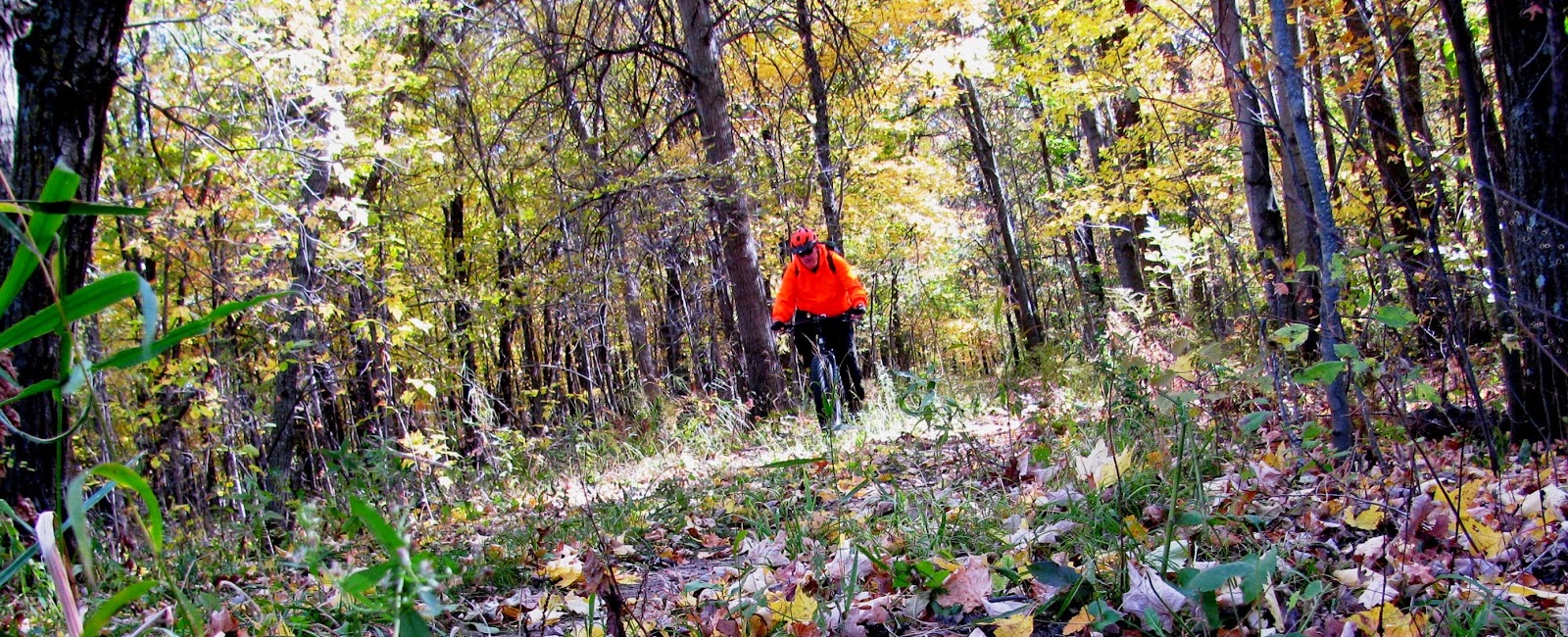
One weekend in September a friend of mine, who is a veteran bicycle tour leader, suggested that I take my Surly Pugsley fat-bike on my planned bikepacking trip instead of my mountain bike. I did, and it changed everything. With the exception of several events that took place in the weeks that followed that required my MTB, I was scarcely been off the Pugs when riding. I did a number of fall colors rides, explored some cool trails in a nearby state forest and even rode some volunteer trail patrol with a bike that I had previously relegated solely to winter use. Those rides became fuel for some overnight trips the following spring, and those photos become the illustrations that I hope will inspire you to go, and see what's out there. Initially, the fat-bike’s claim to fame was it’s ability to ride over snow and sand. But then somebody, or somebodies came to the realization that it could do so much more; that the fat-bike was indeed, the perfect off-pavement, backcountry expedition bicycle. I am now one of those somebodies, The fat-bike, in it's 60-plus brand names, is changing the face of backcountry travel, and like many others I have been swept up in their success. The fat-bike takes me back to when I first started riding a bike as a kid, and experience the sheer joy of riding again.


Proceeding on...
2WX - The Two-Wheeled Explorer

Thursday, August 28, 2014

A Beautiful Day After a Dark and Stormy Night


Originally, I had planned to camp out the night before, but we had heavy rain, thunder and lightning and hail. I have weathered storms like that in a tent before, but it really didn't fit into my plans for this trip. I got up early the next morning, and headed north to the trout lakes of the Cuyuna Country State Recreation Area near Crosby, MN. It was a beautiful day, cooler and dryer than recent weather had been, thanks to the cold front that came through with the storms. I was going to chase rainbows...and brookies.

Cuyuna, as it is known in the mountain biking community, is somewhat of a phenomena in the Minnesota State Park system. It was one of the very first "Ride Centers" designated by the IMBA, the International Mountain Bicycling Association, and enjoys very high visitation from mountain bikers, as well as fishermen (and women) who ply it's many lakes in search of muskie, walleye, bass...and trout. But I wasn't there for the mountain biking this time. Don't get me wrong, I like riding at Cuyuna. It is one of the few places I can mountain bike anonymously, without the red jersey or the front plate of the bike patrol. or my DNR uniform. (Yes, I have and could still "patrol" there, and I always carry a first aid kit and other gear when riding, but I don't have to. Cuyuna has their own patrol, and a great system for dealing with emergencies.) Besides, I wasn't there to ride the MTB trails. I was there to fish, and ride Discovery to various spots I had chosen on a map of the Rec Area, and basically "get away from it all" for a day. I had my collapsable spinning rod and a box of lures, (My replacement collapsable fly rod would arrive on my doorstep while I was away.) and a 27-speed, GPS equipped tackle box to take me there.

I had chosen three lakes, one at each end of the park and one in the north middle section, all of which had been former iron ore pit mines years ago. (You can still see evidence of the mining on many of the MTB trails.) but are now prime fishing spots, and also popular with kayakers and SCUBA divers. The lakes on the ends were connected by the paved Cuyuna Lakes State Trail, and the Overburden Road, a red dirt, sand and clay road that goes into the lakes in the northern section.

Long and short of it, I didn't catch any trout or anything else. I had a couple nice looking brookies follow my lure at Yawkey Pit, and a couple light strikes, but no real takers. But that's okay. I rode almost 16 miles on my favorite bike, through and around some very pretty country, and in the backcountry, there was nobody out there but me. That is what I was really searching for. I am looking forward to doing it one more time before stream trout season closes in mid-September, and taking that new rod with me. That time I'll head into the "real" backcountry of the Chippewa National Forest. It will be wonderful.

One down side, I did lose one of my favorite lures. Oh well.

Proceeding on...
2WX